

Index
- Why choose an alternative to traditional dry cleaning?
- The best DIY fabric dyes: comparison and prices
- Cost-effectiveness: at-home dyeing vs. professional dyeing
- Conclusion
- Frequently Asked Questions
Last updated: August 24, 2026
Why choose an alternative to traditional dry cleaning?
Dyeing fabrics at home is a sustainable and economical alternative to traditional dry cleaners. Many consumers are looking for an alternative to dry cleaning that offers professional results without the high costs and environmental impact of commercial services. Furthermore, the process is also more sustainable: you avoid industrial chemical waste and reduce the carbon footprint associated with commercial transportation.
The best DIY fabric dyes: comparison and prices
When choosing a dye alternative, you need to consider two critical variables: the product format (powder vs. liquid) and the composition (natural vs. synthetic).
Format |
Advantages |
Disadvantages |
Indicative price |
|---|---|---|---|
Powder dye |
Long shelf life, precise dosage, intense colours |
Requires dissolution in hot water |
€3-8 per item |
Liquid dye |
Easy to use, ready to go |
Shorter shelf life, less concentrated |
€6-10 per item |
Natural dye |
Sustainability, no synthetic chemicals |
Less vivid colors, less predictable |
€2-6 per item |
Synthetic dye |
Maximum color rendering, stable colors |
Greater environmental impact |
€3-10 per item |
Powdered dyes vs. liquid dyes
Powder dye remains the preferred choice for professional results. The concentrated format means you pay less per garment and keep the product longer. Aybel offers powder dyes in sizes ranging from convenient standard packs (enough for 1-1.5 kg of fabric) to large 1-5 kg formats for businesses and artisans. Dosage is simple: generally, one 10g sachet is enough to dye 1-1.5 kg of dry fabric.
Liquid dyes are ideal if you prefer to avoid the dissolving step, but they contain more water and therefore less concentrated pigment, increasing the cost per garment and requiring more delicate storage.
Natural vs. synthetic dyes
Natural dyes have gained popularity thanks to the growing demand for sustainable dyes. Those based on black tea, turmeric, or madder offer aesthetic authenticity and a low environmental impact. However, natural dyes do not produce the vibrant colors of synthetic dyes, nor do they guarantee the same yield on large quantities of fabric.
Synthetic dyes offer a full color range, greater predictability, and greater durability. Aybel uses synthetic formulations that guarantee color uniformity and wash resistance. A garment revived using these products will last longer and avoid becoming waste in the short term.
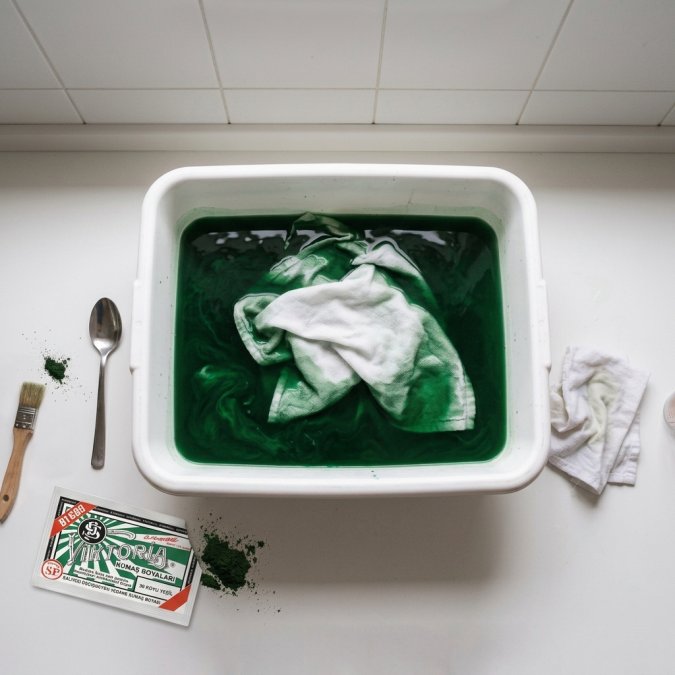
Cost-effectiveness: at-home dyeing vs. professional dyeing
A professional dry cleaner typically charges between €20 and €50 depending on the garment. Dyeing at home costs significantly less, for example, for a cotton garment weighing up to 250g:
- Aybel Powder Hair Dye: €4.98
- Aybel Fiske Fixing Agent (€4.98 for 30ml, enough for 3-4 items): then €1.25
- Water and energy for washing machine: ~ €0.50
- Total cost: €7-10 per item
If you dye 10 garments a year, you'll save significantly compared to a dry cleaner. Besides the cost savings, DIY dyeing offers complete control over the shade and the satisfaction of transforming a garment with your own hands.
Conclusion
Choosing an alternative to traditional dry cleaners doesn't mean compromising on quality. With Aybel products , you'll get professional results at a fraction of the cost, maintaining complete control over the process and reducing your environmental impact. Start with a garment you're not afraid of ruining, follow the steps precisely , and you'll discover that professional quality is within everyone's reach.
Frequently Asked Questions
What is the best brand of fabric dye?
Aybel is an excellent choice for professional results at home. Its range covers 59 different colors and works on cotton, wool, silk, linen, viscose, bamboo, and polyamide. With an average rating of 4.8/5, customers appreciate its color consistency and longevity. Aybel also offers personalized photo consultations to help you choose the right shade.
How to get professional results when dyeing clothes at home?
The key is preparation and setting. Wash the garment in warm water before dyeing, use the correct amount of powder (one sachet per 1-1.5 kg of wet fabric), keep the water at a constant temperature (60°C), and let it soak for 45-60 minutes. Setting is crucial: use a setting agent like Aybel Fiske in the final rinse to lock in the pigment and prolong the color's durability.
What can I use instead of hair dye fixative?
While professional fixing agents like Aybel Fiske ($4.99) are the most reliable, some natural remedies can help: white vinegar (1 cup per 4 liters of water) or coarse salt in the final rinse. However, these natural methods are less effective than chemical fixing agents, especially for frequently washed fabrics. For long-lasting results, professional fixing agents remain the best choice.
Is it better to use natural or synthetic dyes for fabrics?
Synthetic dyes like Aybel's offer more vibrant, uniform, and long-lasting colors, with better yields in larger quantities. Natural dyes (tea, blackberry, turmeric) are eco-friendly and safe, but produce more delicate shades and require mordants to set. Choose synthetics if you want bright, long-lasting colors; naturals if environmental impact is a priority and you accept shade variability.
Are fabric dyes safe for the environment?
Modern synthetic dyes, including those from Aybel, are formulated to minimize the environmental impact compared to industrial processes. The global market for sustainable dyes has grown significantly. However, natural dyes remain the most sustainable option. Whatever your choice, DIY is already a step toward sustainability compared to fast fashion.